



Hello everyone.
One of the questions I often hear from clients interested in hydrogen inhalation is, “What happens to hydrogen after we breathe it in?”
In Episode 62 of my newspaper column, I introduced the pathway through which inhaled molecular hydrogen enters the lungs and moves into the bloodstream.
Today, I’d like to explore this process in more detail and explain the basic science behind hydrogen inhalation.
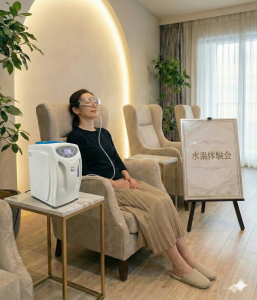
What Is Hydrogen Inhalation?
Hydrogen inhalation is a method of breathing molecular hydrogen gas (H₂) produced by a hydrogen generator, typically through a nasal cannula or an appropriate mask.
When we breathe, air travels through the nose or mouth, down the airways, and into tiny air sacs in the lungs called alveoli.
These structures are responsible for exchanging oxygen and carbon dioxide between the lungs and the bloodstream.
During hydrogen inhalation, molecular hydrogen also reaches the alveoli, where some of it can diffuse across the thin membrane separating the air spaces from the pulmonary capillaries.
Because hydrogen is an extremely small molecule, researchers are interested in how it moves and distributes throughout the body.

How Hydrogen Travels Through the Bloodstream
After entering the pulmonary capillaries, hydrogen moves with the blood through the pulmonary veins to the left side of the heart.
From there, it enters the body’s systemic circulation.
However, not all inhaled hydrogen is absorbed into the bloodstream.
The amount absorbed may depend on several factors, including hydrogen concentration, gas flow rate, breathing patterns, and device specifications.
It is also important to distinguish between hydrogen entering the bloodstream and hydrogen producing a proven health benefit.
Research continues to investigate molecular hydrogen in relation to oxidative stress, inflammation, and other biological processes.
Although these areas are scientifically interesting, many proposed benefits of routine hydrogen inhalation have not yet been established through sufficient high-quality clinical evidence.
I believe understanding both the science and its limitations is essential when exploring hydrogen wellness.
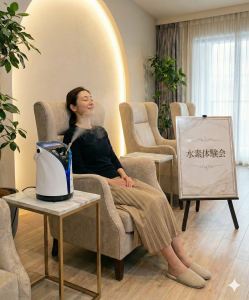
Experiencing Hydrogen Inhalation in New York City
At easeNY, my wellness salon in Manhattan, some first-time clients share experiences such as feeling relaxed, pleasantly warm, or refreshed after a hydrogen inhalation session.
These are individual impressions rather than evidence of a specific medical effect.
One of the reasons people find hydrogen inhalation convenient is that they can relax, read, or enjoy quiet time during a session.
Some clients also become interested in continuing their routine at home and ask about home hydrogen inhalation machines.
Not All Hydrogen Inhalation Machines Are the Same
When comparing hydrogen inhalation devices, it is important to understand several key specifications.
Hydrogen concentration describes the proportion of hydrogen in the delivered gas.
Hydrogen generation capacity and gas flow rate are related but not necessarily identical measurements.
Other considerations include operating time, maintenance requirements, safety features, and compatibility with the intended accessories.
Because hydrogen gas is flammable, appropriate ventilation, equipment design, and adherence to manufacturer safety instructions are especially important.
Rather than choosing a hydrogen generator based only on the highest advertised output, I encourage clients to understand how the device operates and whether it fits their intended routine.

Summary (62-1)
Hydrogen inhalation introduces molecular hydrogen through the lungs, where some of the gas diffuses into the bloodstream and enters systemic circulation.
Understanding this pathway provides a useful foundation for comparing hydrogen inhalation with hydrogen water, hydrogen baths, and other molecular hydrogen products.
At easeNY in Midtown Manhattan, New York City, we welcome inquiries from people who would like to experience hydrogen inhalation or learn more about home hydrogen inhalation systems.
If you’re considering a hydrogen inhalation session or exploring the purchase of a home hydrogen generator, I’d be happy to help you understand the available options.
we’ll take a closer look at the differences between hydrogen inhalation machines, including hydrogen concentration, generation capacity, gas flow rate, and important safety considerations.
This article is intended for general educational purposes and does not constitute medical advice. Hydrogen inhalation is not an established treatment or prevention method for disease. Always follow device safety instructions and consult your healthcare professional if you are receiving medical treatment.
Experience it here at our New York salon.
https://easeny.com/
【Official LINE】Official LINE
【Vitamin C and Hydrogen! Perfect for your daily care!】
Lypo-C Vitamin C
【Latex-Free Cannula】
Latex-Free Cannula
【Distilled Water】
Distilled Water
【Surge Protector】
Surge Protector
【The Ultimate Hydrogen-Nutritional Therapy Guide】
Dr.Michiko Miyakawa