


— Getting Through Winter with Hydrogen Baths —
Hello, I’m Shun.
New York begins to take on a festive atmosphere around Thanksgiving at the end of November.
Holiday lights appear on street trees, houses are decorated, and the city becomes one of the most beautiful places of the year.


That said—above all else—it’s cold.
At least, much colder than what most people in Japan are used to.
From this time of year, temperatures often fall below freezing, and the air becomes extremely dry.
Most apartments in New York use central heating that warms the entire living space, which is certainly convenient. However, combined with the already dry outdoor air, indoor heating makes the environment even drier.
It’s not uncommon for indoor humidity levels to drop to 10–20%.
For people with dry or sensitive skin, this season is especially challenging.

Since I started taking hydrogen baths regularly, my skin dryness felt noticeably better for me.
However, as winter deepened, there were days when my skin simply couldn’t keep up with the extreme dryness. I began to notice itchiness caused by dry skin on my back, arms, and hands again.
On top of that, the busy year-end schedule made it harder to secure enough time for long baths.
What used to be four hydrogen baths a week gradually dropped to three, and soaking times that were once always over 20 minutes sometimes became less than 15 minutes.
Ideally, a hydrogen bath involves generating hydrogen for about 15 to 30 minutes before soaking.
But in reality, it’s not always easy to wait that long. There are many days when I end up getting into the bath after only about 10 minutes of hydrogen generation.
One major reason for this is the difference between Japanese and American bathroom design.
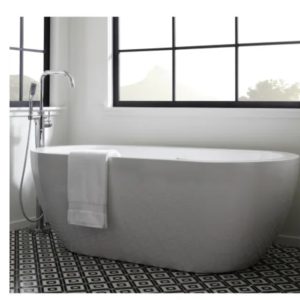
In the U.S., most bathrooms have a bathtub, toilet, and sink all in one space, with tiled floors. There is no separate washing area like in Japanese bathrooms, so you wash your body inside the tub itself.
In Japan, it’s common for family members to share the same bathwater.
In contrast, in the U.S., the bathtub is typically drained and refilled for each person.
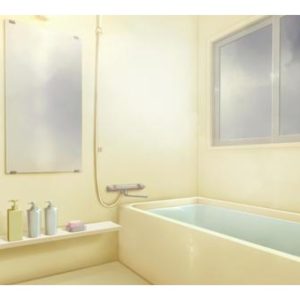
In my case, four family members share a single bathroom. This naturally limits how long I can occupy it.
My usual routine is to take a bath after everyone else has finished. On days when I come home late or when someone else’s bath runs long, there are times when I simply give up and skip the hydrogen bath.
Because of these differences in bathroom structure and daily routines, soaking in a bathtub is not a common habit in the U.S.
I’ve recommended hydrogen bath devices to Japanese clients at salons in New York, but surprisingly few people soak in a bathtub on a daily basis.
Most of the customers who decide to purchase a hydrogen bath unit are those whose children are already grown or who live without children at home.
From this perspective, it feels like hydrogen baths may take some time to become widely adopted in the U.S., given the typical bathroom layout and lifestyle here.
As for me, my skin is still adjusting to the winter dryness.
I’ve been trying to secure hydrogen bath time early in the morning, when it doesn’t overlap with my family’s bathroom use.
Recently released higher-output bath units offer about three times the hydrogen generation capacity of standard models. This means hydrogen can be produced faster and at higher concentration, which can feel more practical even when bath time is shorter.
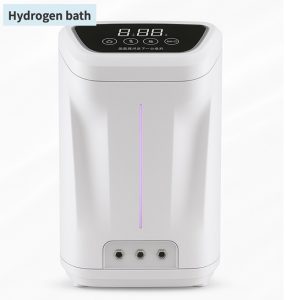
That said, they are also quite expensive, so for now, I’ll keep working with my current setup and hope to upgrade someday.
For the time being, I plan to adjust my daily schedule as best I can, continue making time for hydrogen baths, and get through the harsh New York winter with care.

Disclaimer
This article reflects personal experience and impressions. Results vary by individual.
This content is not intended as medical advice, diagnosis, or treatment.
Experience it here at our New York salon.
https://easeny.com/
【Official LINE】Official LINE
【Vitamin C and Hydrogen! Perfect for your daily care!】
Lypo-C Vitamin C
【Latex-Free Cannula】
Latex-Free Cannula
【Distilled Water】
Distilled Water
【Surge Protector】
Surge Protector
【The Ultimate Hydrogen-Nutritional Therapy Guide】
Dr.Michiko Miyakawa